Harley davidson bikes
 Harley davidson bikes
 Harley davidson bikes
 Harley davidson bikes
Harley davidson bikesHarley davidson bikesHarley davidson bikes Harley davidson bikesHarley davidson bikesHarley davidson bikes
 The build quality on the Yamaha Majesty is just what you’d
 There is really no situation the Majesty cannot handle. Flat roads or up curvy hillsides, single passenger or two up, tight city streets or open highways; the Majesty effectively handled them all thanks to her 395cc, fuel-injected, 4-valve, double overhead cam, single-cylinder engine.
 One more benefit to having a 440-lb scooter is stability. Ride California’s windy highways on a 250cc Aprilia SportCity and then on this baby and you can really feel the difference. I just tucked my helmet behind the shield and she plowed through the wind like a juggernaut. If you are planning to put some real cross-country miles on the Majesty, you might want to invest in a touring windshield. You lose a bit from an efficiency standpoint, but you also spare yourself some of the wind and noise fatigue. Go for the ear plugs for added comfort.
 The Majesty is so well thought out. The first time you have to engage the handlebar-mounted parking brake to adjust your helmet while on a hill, you’ll start to realize it. How about that storage space? Under the seat alone you’ve got 16 gallons! That number may not help you, but put it like this… the underseat storage alone swallowed up a helmet, a laptop, a video camera, a still camera, some accessories and a notebook with a little room to spare! There’s also a light to help you see everything in the cavernous storage area under the passenger’s seat. If that’s not enough there’s more lockable storage space behind the leg shield.
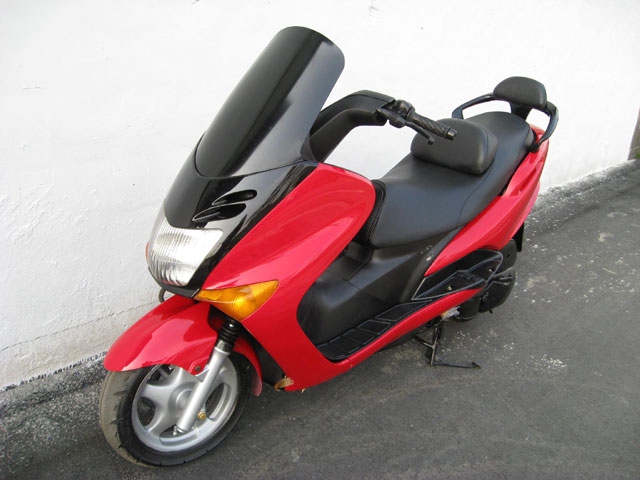 Yamaha Majesty 125
 Yamaha Majesty 1251) Environment-friendly performance at half the levels of Taiwan¡¯s Phase 4 emissions standards The MAJESTY 125FI achieves emission levels for CO, HC and NOx that are half or less than those specified in Taiwan¡¯s Phase 4 emissions standards set to go into effect in June of 2004. (The Phase 4 emissions standards are based on cold-start mode that is said to be difficult to deal with simply by exhaust treatment measures.) 2) 39 km/liter fuel economy (CNS mode) The adoption of fuel injection makes it possible to optimize injection pressure, volume and timing in accordance with engine rpm and running conditions and thus achieve 39 km/liter fuel economy (on CNS mode). (The existing model gets 36 km/liter.) 3) Excellent starting performance This model achieves outstanding starting performance at high elevations, at high and low temperatures and after the machine has been left unused for long periods. 4) High level of drivability (machine running performance) The optimal control of the air-fuel ratio made possible by the fuel injection system ensures excellent drivability, good acceleration, excellent performance stability at high elevations and steady idling performance.
  Yamaha Majesty 125
 Yamaha Majesty 125This means steady cruising performances at higher elevations that can reach 2,000 meters in Taiwan. Main Features from the Existing Model 1) Highly reliable liquid-cooled OHC single-cylinder engine and V-belt automatic transmission A liquid-cooled OHC, 124cc single-cylinder engine characterized by torque-y performance and quiet running is adopted. In combination with the V-belt automatic transmission it provides spirited running performance and good acceleration. 2) Generous-dimension chassis design for enjoyable cruising The body that give this model its excellent handling stability and riding comfort is built around a specially design frame that draws on technologies used in the 250cc Majesty model that is so popular in Japan and Europe. The combination of an optimum frame rigidity balance, the long wheelbase and wheels mounting12-inch tires front and rear give this model a truly stayble ride with very neutral handling. The aerodynamically designed cowling also adds to the riding comfort.
  Yamaha Majesty 125
 Yamaha Majesty 125
 Yamaha Majesty 125Overall length x width x height: 2,065mm x 740mm x 1,240mm Seat height: 710mm Wheelbase: 1,500mm Minimum ground clearance: 110mm Dry weight: 136.5kg Fuel consumption (paved flat road): 39.0km/liter (Taiwan CNS mode) Engine type: Liquid-cooled, 4-stroke, SOHC, 2-valve Cylinder arrangement: Single cylinder Displacement: 124cc Bore x Stroke: 53.7mm x 54.8mm Compression ratio: 11.0 : 1 Maximum power: 8.1kW / 8,500rpm Maximum torque: 10.1N-m / 6,5 00rpm Starting system: Electric/kick duo Lubrication: Pressurized wet sump Engine oil capacity: 1.2 liter Fuel tank capacity: 8 liter Carburetion: Electronic control fuel injection Ignition system: T.C.I. Battery capacity / Type: 12V, 6Ah (10H) / YTX7A-BS Clutch type: Dry, centrifugal Transmission type: Stepless, V-belt Gear ratios: 2.541~0.792 Frame type: Backbone (pipe) Caster / Trail: 27°/ 33mm Tire size (Front / Rear): 120/70-12 51J / 130/70-12 59J Brake type (Front / Rear): Hydraulic, single disc / Drum Suspension type(Front / Rear): Telescopic / Unit swing Headlight: Halogen bulb 12V, 65W/55W Product Features Advantages of the New Fuel Injection Engine A new fuel injection system has been designed specifically for this model and to accommodate it the designs of the manifold and fly wheel magnate have been optimized. In combination with Yamaha¡¯s Air Induction System and the catalyzer, this new system provides numerous advantages. 1) Environment-friendly performance at half the levels of Taiwan¡¯s Phase 4 emissions standards The MAJESTY 125FI achieves emission levels for CO, HC and NOx that are half or less than those specified in Taiwan¡¯s Phase 4 emissions standards set to go into effect in June of 2004. (The Phase 4 emissions standards are based on cold-start mode that is said to be difficult to deal with simply by exhaust treatment measures.) 2) 39 km/liter fuel economy (CNS mode) The adoption of fuel injection makes it possible to optimize injection pressure, volume and timing in accordance with engine rpm and running conditions and thus achieve 39 km/liter fuel economy (on CNS mode). (The existing model gets 36 km/liter.) 3) Excellent starting performance This model achieves outstanding starting performance at high elevations, at high and low temperatures and after the machine has been left unused for long periods. 4) High level of drivability (machine running performance)Yamaha Majesty 125Yamaha Majesty 1251) Environment-friendly performance at half the levels of Taiwan¡¯s Phase 4 emissions standards The MAJESTY 125FI achieves emission levels for CO, HC and NOx that are half or less than those specified in Taiwan¡¯s Phase 4 emissions standards set to go into effect in June of 2004. (The Phase 4 emissions standards are based on cold-start mode that is said to be difficult to deal with simply by exhaust treatment measures.) 2) 39 km/liter fuel economy (CNS mode) The adoption of fuel injection makes it possible to optimize injection pressure, volume and timing in accordance with engine rpm and running conditions and thus achieve 39 km/liter fuel economy (on CNS mode). (The existing model gets 36 km/liter.) 3) Excellent starting performance This model achieves outstanding starting performance at high elevations, at high and low temperatures and after the machine has been left unused for long periods. 4) High level of drivability (machine running performance) The optimal control of the air-fuel ratio made possible by the fuel injection system ensures excellent drivability, good acceleration, excellent performance stability at high elevations and steady idling performance. Yamaha Majesty 125Yamaha Majesty 125This means steady cruising performances at higher elevations that can reach 2,000 meters in Taiwan. Main Features from the Existing Model 1) Highly reliable liquid-cooled OHC single-cylinder engine and V-belt automatic transmission A liquid-cooled OHC, 124cc single-cylinder engine characterized by torque-y performance and quiet running is adopted. In combination with the V-belt automatic transmission it provides spirited running performance and good acceleration. 2) Generous-dimension chassis design for enjoyable cruising The body that give this model its excellent handling stability and riding comfort is built around a specially design frame that draws on technologies used in the 250cc Majesty model that is so popular in Japan and Europe. The combination of an optimum frame rigidity balance, the long wheelbase and wheels mounting12-inch tires front and rear give this model a truly stayble ride with very neutral handling. The aerodynamically designed cowling also adds to the riding comfort. Yamaha Majesty 125Yamaha Majesty 125Yamaha Majesty 125Overall length x width x height: 2,065mm x 740mm x 1,240mm Seat height: 710mm Wheelbase: 1,500mm Minimum ground clearance: 110mm Dry weight: 136.5kg Fuel consumption (paved flat road): 39.0km/liter (Taiwan CNS mode) Engine type: Liquid-cooled, 4-stroke, SOHC, 2-valve Cylinder arrangement: Single cylinder Displacement: 124cc Bore x Stroke: 53.7mm x 54.8mm Compression ratio: 11.0 : 1 Maximum power: 8.1kW / 8,500rpm Maximum torque: 10.1N-m / 6,5 00rpm Starting system: Electric/kick duo Lubrication: Pressurized wet sump Engine oil capacity: 1.2 liter Fuel tank capacity: 8 liter Carburetion: Electronic control fuel injection Ignition system: T.C.I. Battery capacity / Type: 12V, 6Ah (10H) / YTX7A-BS Clutch type: Dry, centrifugal Transmission type: Stepless, V-belt Gear ratios: 2.541~0.792 Frame type: Backbone (pipe) Caster / Trail: 27°/ 33mm Tire size (Front / Rear): 120/70-12 51J / 130/70-12 59J Brake type (Front / Rear): Hydraulic, single disc / Drum Suspension type(Front / Rear): Telescopic / Unit swing Headlight: Halogen bulb 12V, 65W/55W Product Features Advantages of the New Fuel Injection Engine A new fuel injection system has been designed specifically for this model and to accommodate it the designs of the manifold and fly wheel magnate have been optimized. In combination with Yamaha¡¯s Air Induction System and the catalyzer, this new system provides numerous advantages. 1) Environment-friendly performance at half the levels of Taiwan¡¯s Phase 4 emissions standards The MAJESTY 125FI achieves emission levels for CO, HC and NOx that are half or less than those specified in Taiwan¡¯s Phase 4 emissions standards set to go into effect in June of 2004. (The Phase 4 emissions standards are based on cold-start mode that is said to be difficult to deal with simply by exhaust treatment measures.) 2) 39 km/liter fuel economy (CNS mode) The adoption of fuel injection makes it possible to optimize injection pressure, volume and timing in accordance with engine rpm and running conditions and thus achieve 39 km/liter fuel economy (on CNS mode). (The existing model gets 36 km/liter.) 3) Excellent starting performance This model achieves outstanding starting performance at high elevations, at high and low temperatures and after the machine has been left unused for long periods. 4) High level of drivability (machine running performance)
 Seat: The seat has a low profile, hugging the frame. It’s wide enough for us full figured gals and narrow enough where I can almost flat-foot it. It provides decent support overall however I wouldn’t go so far as to say it’s an all day tripper.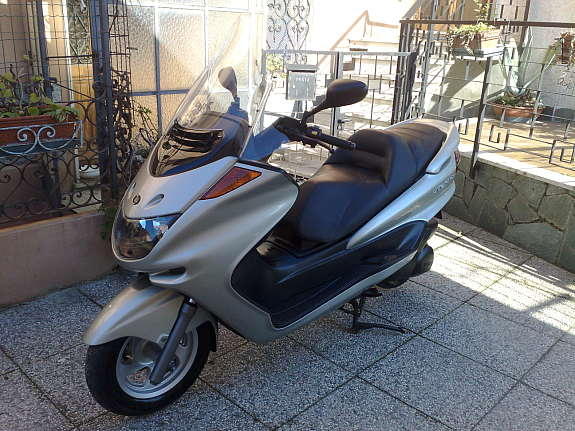
 Highway Power/Zip: The 942cc air cooled engine is sweet. The surge of power I get with the twist of the throttle is addictive. It has plenty of power to spare while cruising at 70 mph when you have to pass. And the growl from the exhaust is music to my ears. As I said, I do feel some vibes the higher the speeds get but it’s not intrusive.

 The sound they make isn’t pleasant but it’s a good reminder to slow down. The suspension is very good and soaks up the bumps quite well.
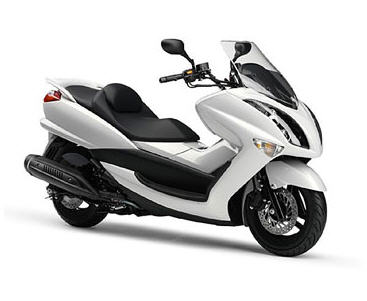
 TMAX is fully equipped for its multiple roles, starting with its dual front disc brakes which offer both the power and control needed for true sports riding, and on TMAX 500ABS these have the additional back-up of Yamaha's advanced ABS anti-lock braking system, ensuring maximum safety in all conditions. The effortlessly powerful twin-cylinder, 499cc engine provides enough performance for all types of road, from steep mountain climbs to high speed motorways. The balance shaft gives it a smooth, sophisticated feel, while the rear suspension has a motorcycle-style independent swingarm for the highest ride quality and maximum cornering control.
 TMAX's twin headlight design not only gives it its characterful, purposeful look, it also provides high visibility for seeing and being seen, night or day. Despite its sporting credentials, TMAX offers a big underseat storage capacity as well as luggage space in the front bodywork section. Its convenience even extends to a parking brake.


 he effortlessly powerful twin-cylinder, 499cc engine provides enough performance for all types of road, from steep mountain climbs to high speed motorways. The balance shaft gives it a smooth, sophisticated feel, while the rear suspension has a motorcycle-style independent swingarm for the highest ride quality and maximum cornering control.
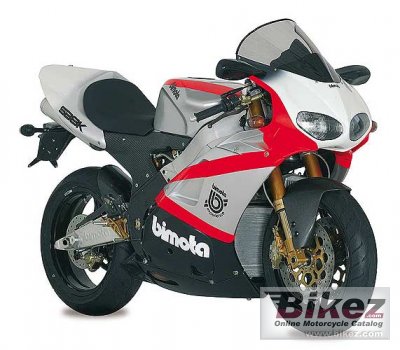 Bimota
 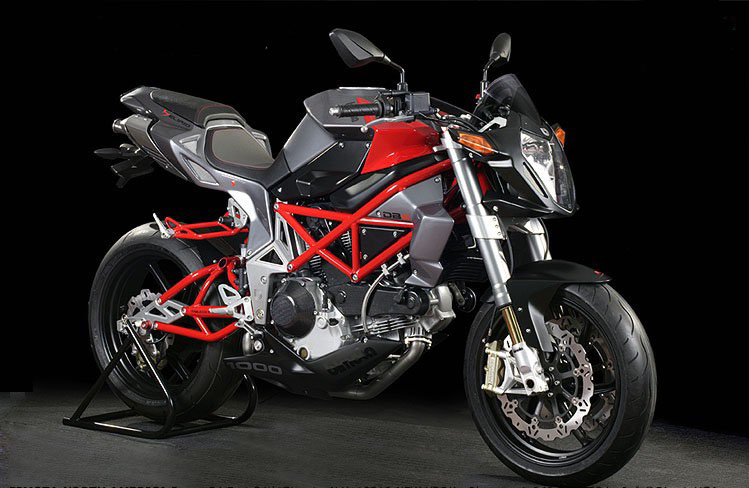 Bimota
  Bimota
  Bimota
  Bimota
  Bimota
  Bimota
  Bimota db7
  Bimota db7
  Bimota db7
  Bimota db7
  Bimota db7
  Bimota db7
